

As technology continues to evolve, startups remain at the forefront of innovation. Two local companies, both part of spARK Labs, an innovation hub backed by investor Cathie Wood’s ARK Invest, are helping shape what’s next through advancements in the medical and aerospace industries.
Rovex Technologies Corporation
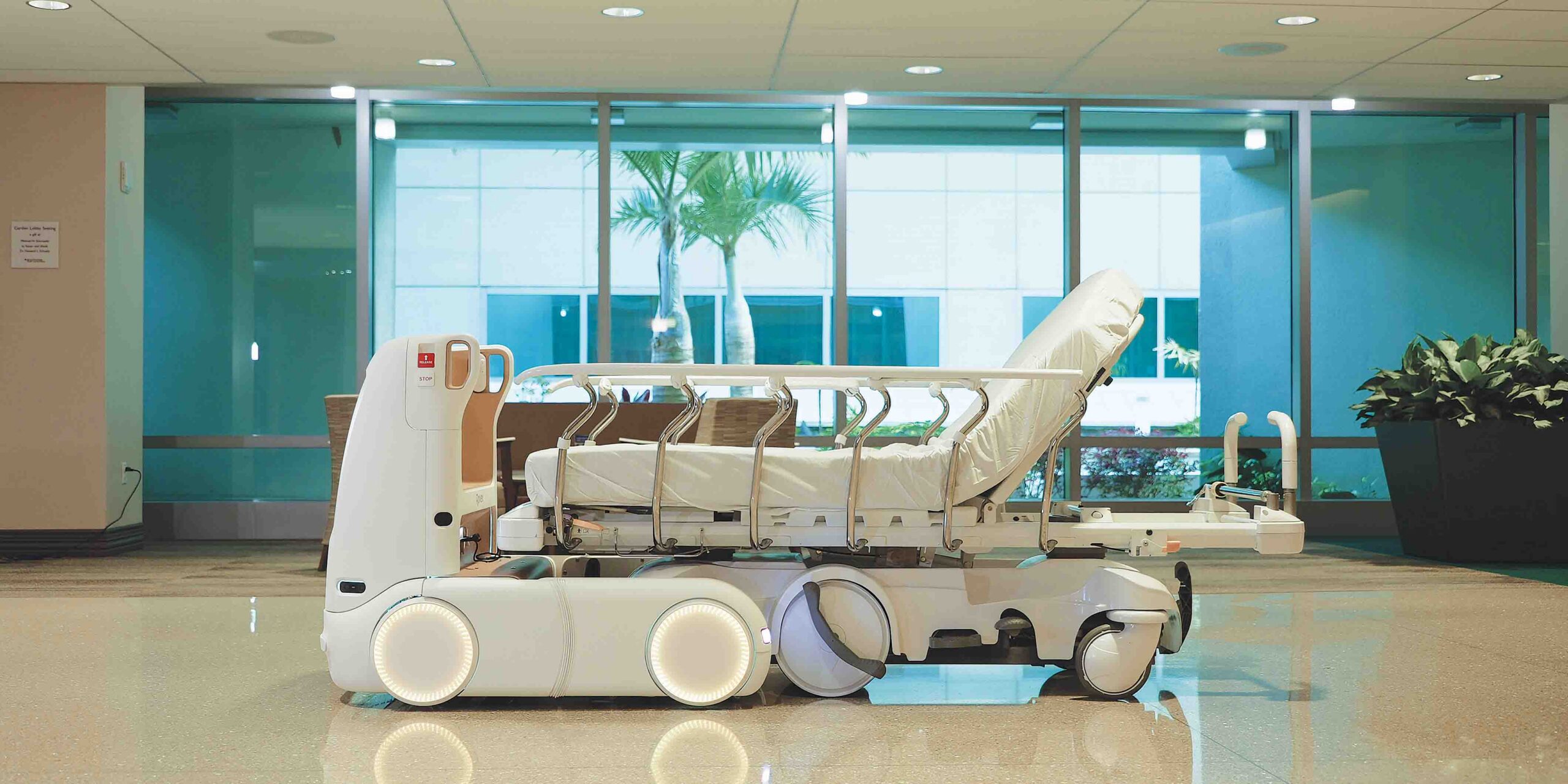
Rovi may be undeniably cute, but the autonomous hospital transport robot from Rovex Technologies Corporation has a serious job to do. Equipped with a friendly smile and designed to improve hospital operations, it was inspired by a challenge co-founder and CEO David Crabb witnessed firsthand while working in an emergency department: Patients were often ready to head to imaging, a procedure, an inpatient room or discharge but were left waiting because no one was available to transport them.
“Nurses, techs, and transporters were doing everything they could, but hospitals are incredibly complex places, and patient movement is one of those behind-the-scenes challenges that affects almost everything,” Crabb says.
The idea was straightforward: What if a robot could take over one of the most repetitive and physically demanding jobs in a hospital by safely moving stretchers from one place to another?
The first prototype was built in a garage to prove the concept could work. Once the team demonstrated a robot could attach to a stretcher and move it safely, the focus shifted from simply building a robot to rethinking hospital logistics. Today, Rovex sees Rovi as more than a piece of technology. The company hopes it will become a helpful teammate, giving healthcare workers more time to spend with patients.
Developing Rovi required multiple prototypes and extensive testing. The team refined everything from turning, braking and stretcher attachment to navigation, sensors and obstacle avoidance, all while designing the robot to operate in busy, unpredictable hospital environments.

Although Rovi is not yet transporting patients, development continues with a focus on testing, validation and the regulatory process required before it can safely support patient transport.
“I am most proud that Rovi came from listening to people in healthcare,” Crabb says. “This was not technology looking for a problem. This came from watching patients, nurses, techs, transporters, and clinicians lose valuable time to a process that everyone knows is important but no one has enough hands to solve.”
Crabb says Rovi’s approachable personality is intentional.
“It is small, approachable, and a little cute, but it is not a toy,” he says. “Rovi has a serious job.”
In the near term, Rovex is working with hospital partners, including BayCare Health System, to continue refining and validating the technology. Long term, Crabb envisions Rovi as the first step in a broader effort to improve hospital logistics and patient flow.
“Our hope is that Rovi becomes the kind of helper people are happy to see in the hallway,” he says. “Not because it replaces anyone, but because it helps the whole system move a little better.”
Seagate Space Corporation
Michael Anderson spent his career working across the transportation industry, from automotive and high-speed rail planning to aerospace and maritime strategy. After years of seeing opportunities for innovation in the maritime sector, Anderson and co-founder and Chief Operating Officer, Sean Fortener, left careers at one of the largest U.S.-flag maritime companies to launch Seagate Space in January 2025.
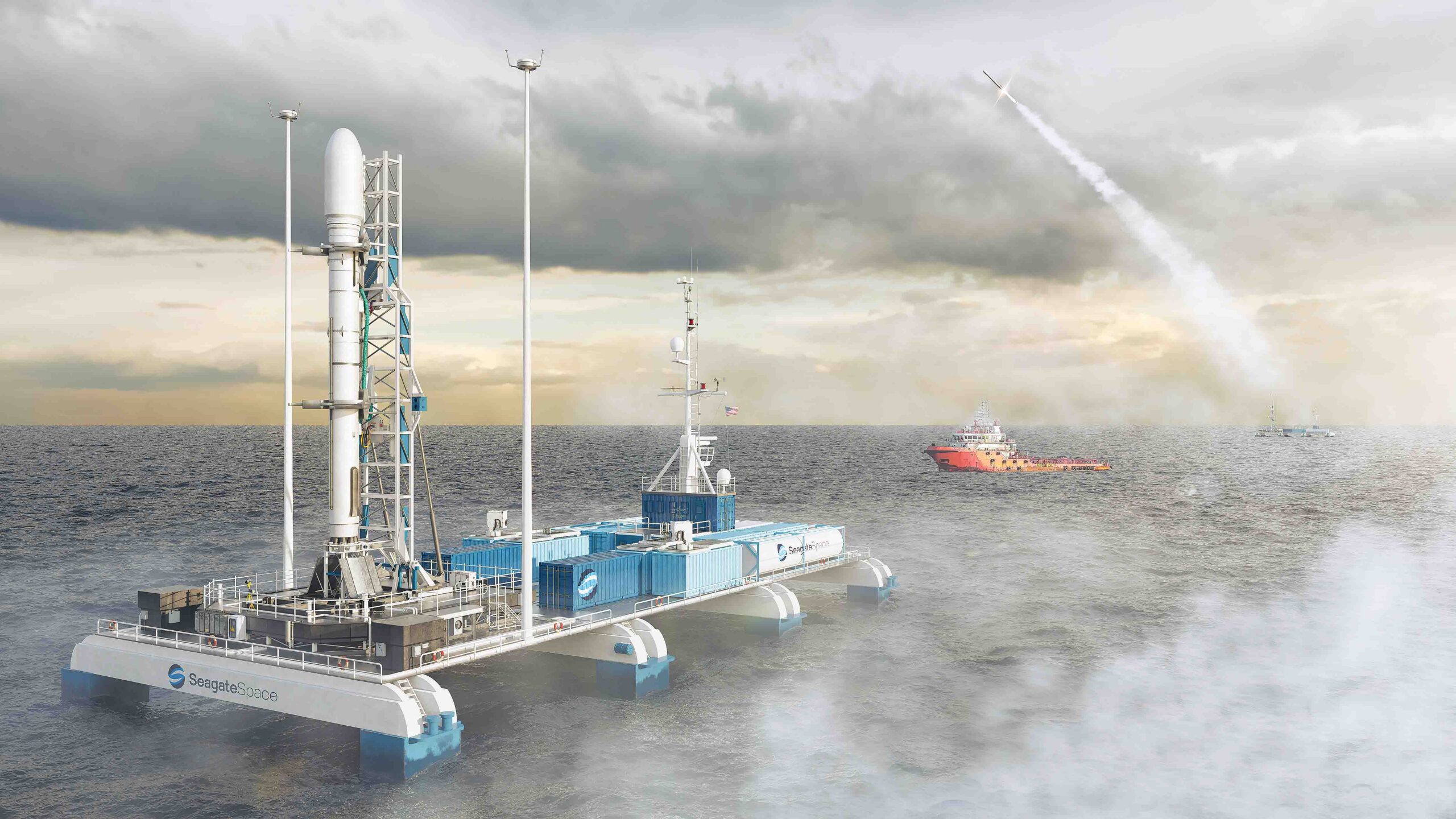
The company’s mission is to become “the offshore American partner for the space industry” by developing maritime systems capable of supporting rocket launches at sea.
For Anderson, the idea came from seeing how traditional industries could benefit from new approaches. While working in the maritime sector, he saw highly skilled and creative professionals operating within an industry that was often slow to change. That shifted when he began looking at the growing relationship between maritime and space.
Companies like SpaceX helped demonstrate the potential of offshore operations, using recovery barges to land rockets at sea. As Anderson and his team studied the industry, they saw another opportunity: creating dedicated offshore launch infrastructure to help expand access to space.
Launching from the open ocean could provide several advantages, including creating distance from populated areas and reducing conflicts that come with building large-scale launch infrastructure along the coast.
Seagate Space is developing Gateway, a series of offshore launch platform designs. One design, Gateway-S, is moving toward commercialization and has received significant attention as the company works to bring the concept closer to reality.
In December 2025, Seagate Space received approval in principle from the American Bureau of Shipping, a third-party review confirming the design, naval architecture, engineering and safety case met established standards. The company also completed scale-model testing at the Massachusetts Institute of Technology’s hydrodynamics laboratory and received support from Space Florida through Project Manta, an initiative focused on developing offshore launch capabilities.
The Seagate Space team is currently building a prototype modular ballast tank system at the Port of Tampa with Tampa Ship as its construction partner. Anderson hopes Gateway-S will support its first launch by the end of 2027 or early 2028.
“Rockets are one of the newest forms of transportation and maritime is probably one of the oldest,” Anderson says. “It’s exciting to me to see how this new form of transportation is driving new thinking and innovation in one of the oldest.”
Meet Tampa Bay’s Healthcare Heroes. Or if you’re interested in advertising, click here.

