


The Christmas tree business requires perseverance.
Ed Gallio has learned this on his seasonal lot at St. Patrick’s Catholic Church in South Tampa. Toby and Debbie Harris have learned it on their tree farm in Dade City.
Changes in weather patterns and distribution have made this business not for the faint of heart. There’s a well-publicized tree shortage across the country. Many Christmas tree farms established during the 1980s have ceased operations as owners sold land to developers or the next generation stepped out of the business.
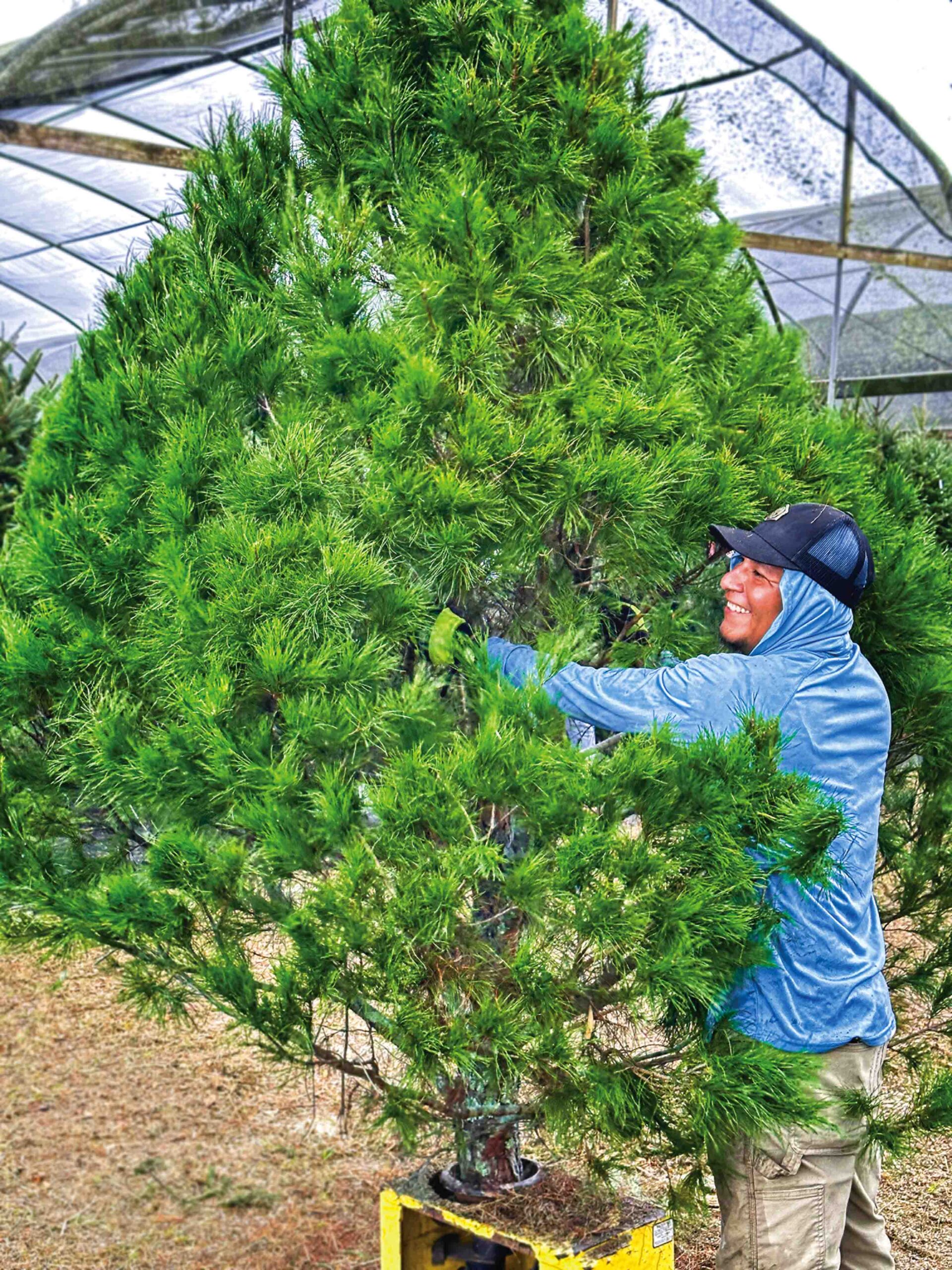
“Rain has become more inconsistent,” says Toby Harris of Ergle’s, the largest Christmas tree farm in Central Florida. The Dade City farm shifted from oranges to Christmas trees in the 1980s. They now rely on an irrigation system when the rain is insufficient—an expense that was unnecessary a generation ago.
“When we had the hurricanes last year, most of the independent drivers went to FEMA. What you could get, the prices were higher,” says Ed Gallio, who has been operating in South Tampa for 31 years.
Despite the challenges, both operations draw customers from across Central Florida. They have regulars from Clearwater, Sarasota, Vero Beach and throughout Tampa Bay. They’ve built large, loyal and multi-generational customer bases by offering high-quality trees and creating a fun, family-friendly atmosphere.
Ergle’s grows sand pines and cedars while bringing in freshly cut Douglas, Fraser and balsam firs from North Carolina. Customers can cut down their own locally grown tree or select a fir from Ergle’s 17,000-square-foot greenhouse, where trees go into water and a stand the moment they arrive. The old horse barn has become a gift shop offering decorations and homemade wreaths. There’s also a train for kids that runs around the property and freshly made kettle corn to snack on.
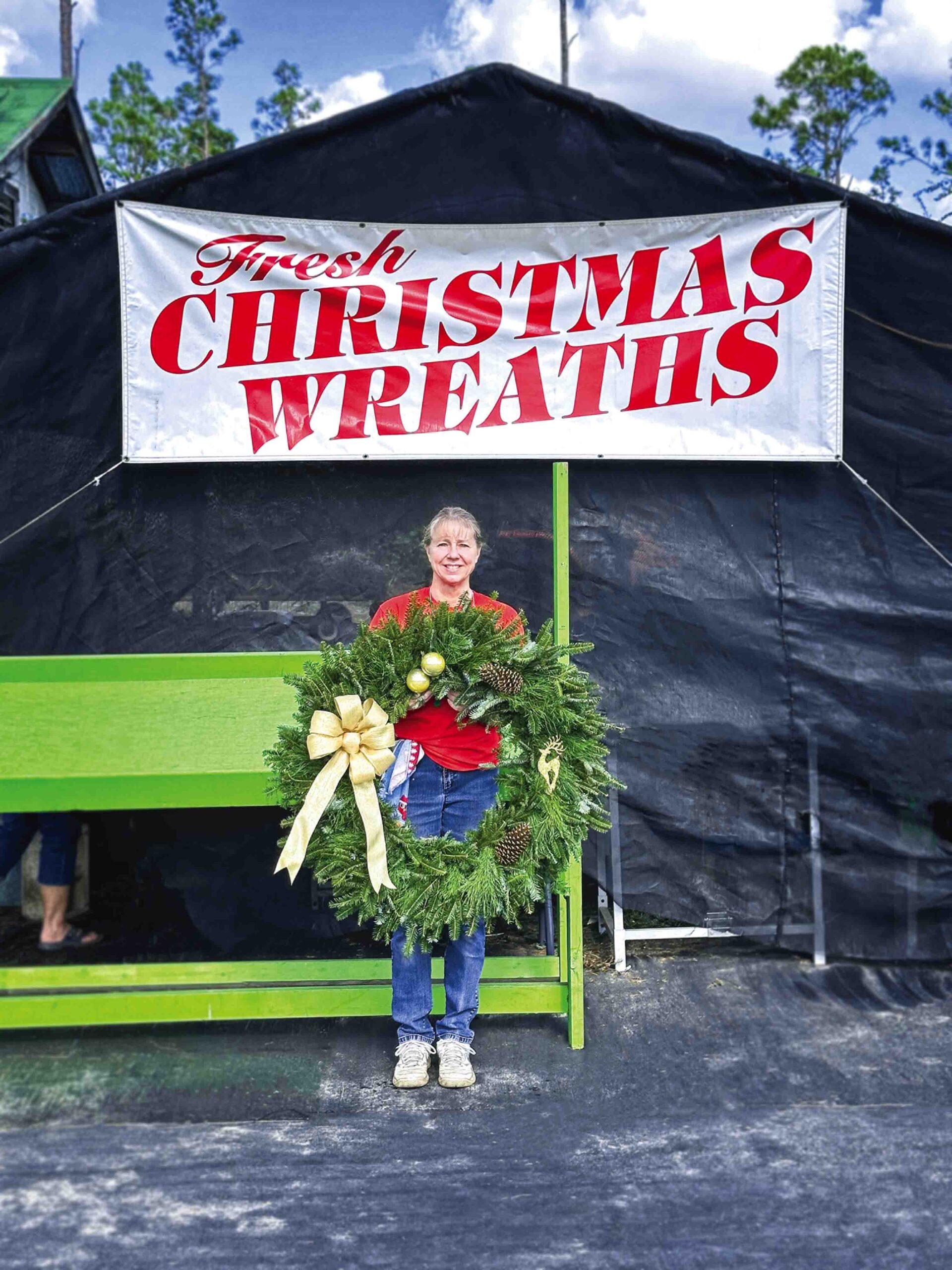
Gallio’s also brings Frasier firs fresh from North Carolina and noble firs from Washington state. His trees are kept in water from the moment they arrive and are sold within days of being cut. Gallio’s also sells homemade wreaths and games like cornhole, tabletop hockey and pop-a-shot basketball.
“I live in South Tampa. I sell my trees in South Tampa. I want to give the best quality I can to my neighbors,” Gallio says.
Gallio and Harris emphasize how different their operations are from buying a tree at a big-box store. Often, the trees for sale at such stores were cut in October, shipped to a warehouse and distributed weeks later.
“Educate yourself about the freshness of the tree. If you touch that tree and the needles are dropping already, it’s been cut too long,” Harris says.
Harris recommends getting the tree in water as quickly as possible to help it stay green and maintain its Christmas scent. He advises making a fresh quarter-inch cut across the stump and placing it in warm water immediately—then switching to tap water—to prevent the sap from sealing and ensure it continues to absorb moisture.

Gallio advises placing the tree in a full bucket of water if it won’t go into the stand right away, watering it daily and keeping it away from picture windows or heating vents to prevent it from drying out. For a sentimental touch, he offers to cut a slice from the trunk for families celebrating a baby’s first Christmas, which can be drilled, decorated with a photo and hung as an ornament.
Tree prices vary widely. A good-quality tabletop tree can cost as little as $40, while a Grade A tree more than 8 feet tall can run several hundred dollars.
Ergle’s opens for the season Nov. 15. Gallio’s opens Thanksgiving week.
“It’s in my blood. I love being outside and I love seeing the customers every year,” Harris says.
Looking for holiday festivities? Check out our Event Calendar. Or if you’re looking to advertise with us click here.

