

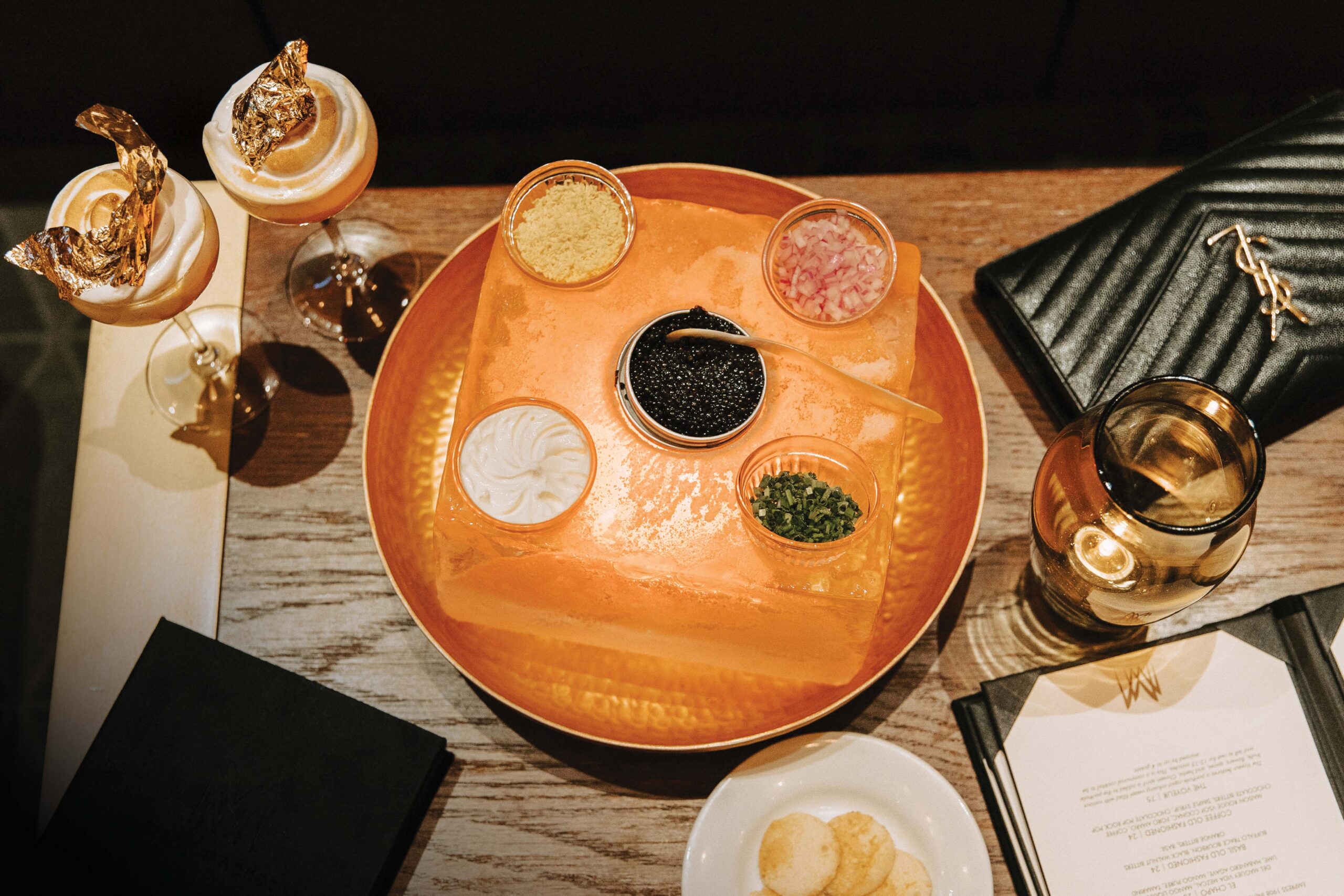
Once regarded as a culinary luxury or reserved for special occasions, true caviar—small, briny pearls sourced from sturgeon roe—is becoming more accessible and increasingly popular. Fueled in part by Gen Z and social media trends like TikTok’s “caviar bumps,” the global caviar market is projected to reach $688.34 million by 2032, according to Forbes.
Whether served as a subtle accent or the centerpiece of a dish, a handful of Tampa Bay restaurants are embracing caviar with intention—moving beyond the trend to elevate the dining experience.
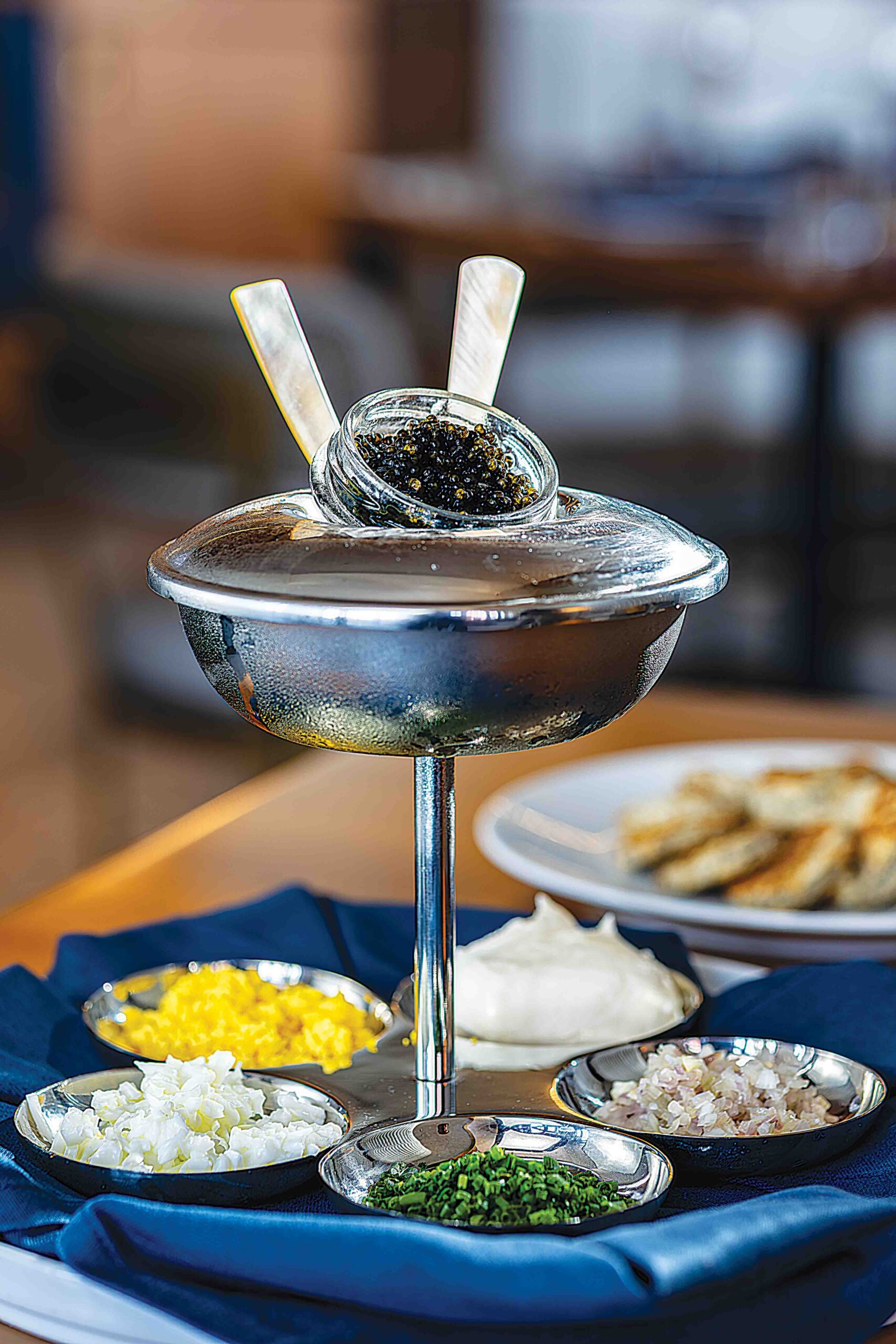
While you may have seen so-called “caviar” in the form of large, orange boba-like spheres or smaller, caper-like orbs, chefs emphasize a key distinction: true caviar comes exclusively from sturgeon. Everything else—salmon roe, trout roe and beyond—is simply roe, not caviar, notes Kenneth Tufo, chef de cuisine at Maritana at The Don CeSar.

Within the world of true caviar, there’s a range of varieties and flavor profiles. Beluga, light to dark gray in color, is prized for its buttery, mild taste and high price due to strict harvesting regulations. Osetra, a favorite among chefs, offers a nutty, briny flavor with hues ranging from golden to brown. Kaluga, often considered a more accessible alternative to beluga, has a similar clean, buttery profile and a dark amber tone. Sevruga is smaller and more intensely salty, with a darker gray appearance, while paddlefish, with its steel-gray color and mineral-forward flavor, is often seen as an entry point. Hackleback rounds out the group with its small size and distinctly earthy taste.
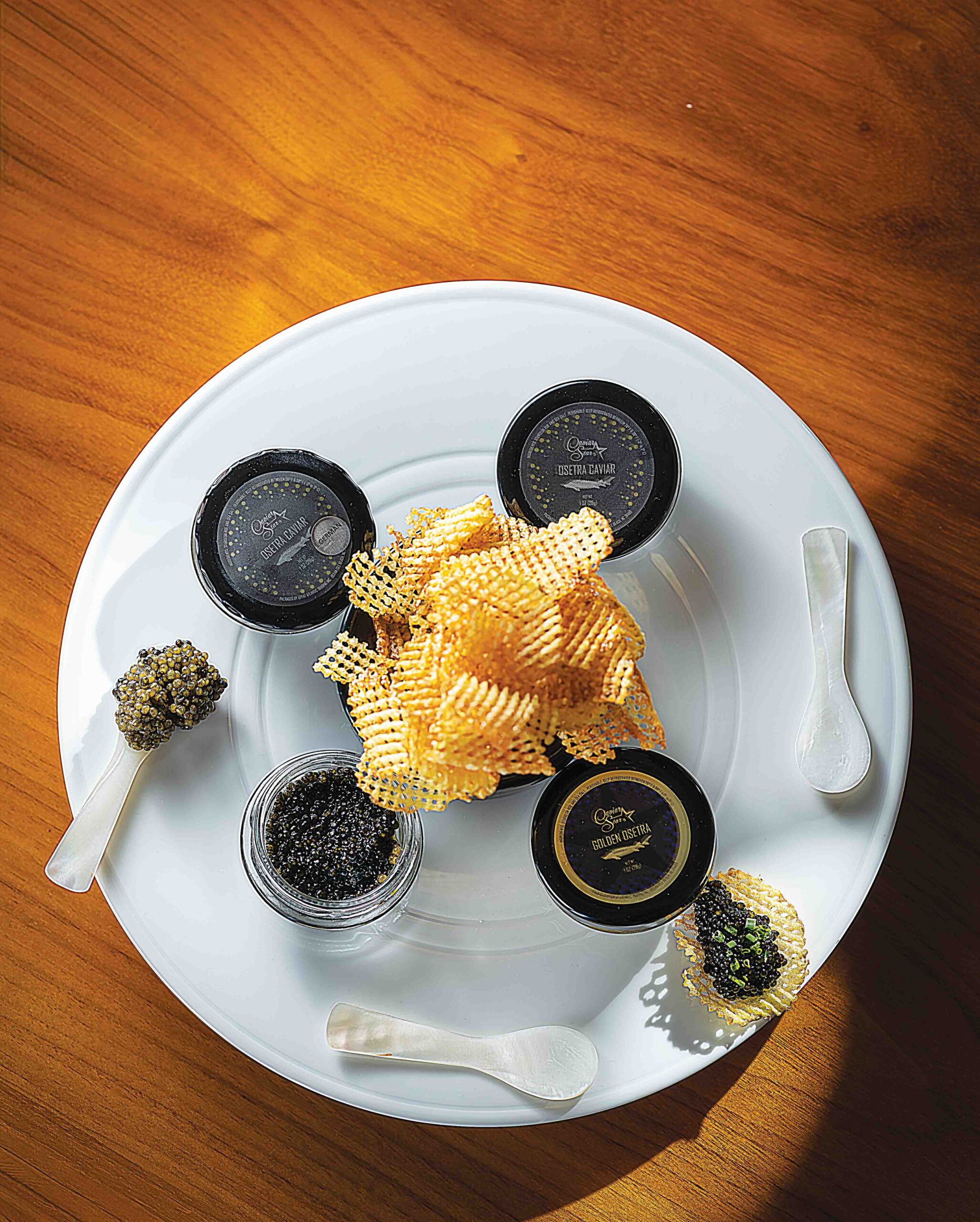
When it comes to enjoying caviar, Tufo prefers to let it stand on its own. “Traditionally, caviar is treated as the main focus and not just a garnish because heat, acid and strong flavors can destroy its texture and subtle flavor,” he says. “Think of it like truffles or any other luxury ingredients.”
Classic accompaniments include crème fraîche, toast points and Champagne or dry white wine. More unexpected pairings range from potato chips and buttered pasta to fried chicken or wagyu.
“One of my absolute favorite pairings is caviar with very soft scrambled eggs on a crostino with chives! I also prefer classically served with crème fraiche, chives and blini,” says Tufo.
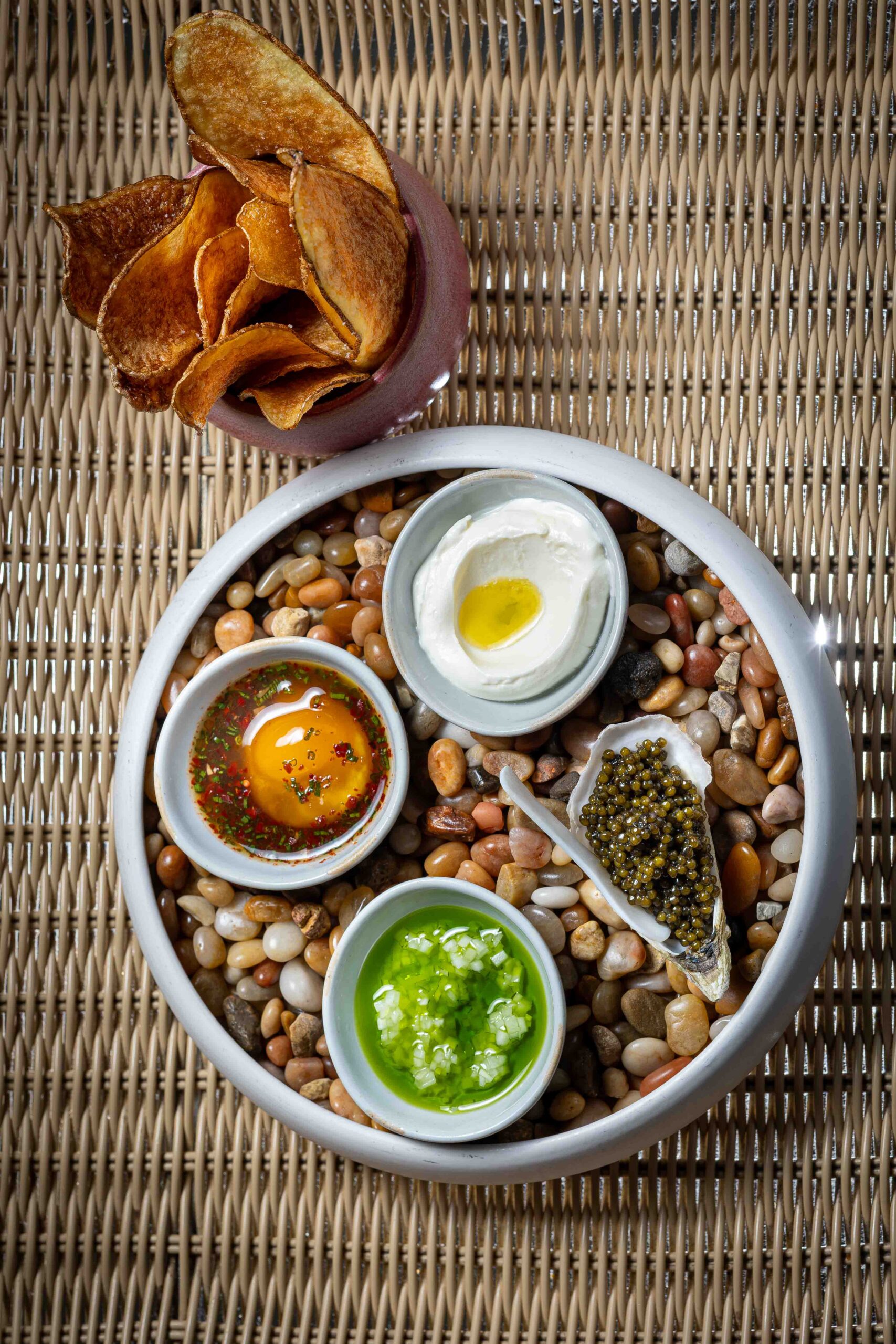
On the more unconventional side, Ferrell Alvarez, co-owner of Proper House Group—the team behind Rooster & the Till, Ash and Alter Ego—has embraced creative caviar pairings. At Ash, alongside an elevated caviar service with gin-compressed cucumbers, maple fish sauce-cured egg yolks, lemon crème fraîche and housemade salt-and-vinegar potato chips, the restaurant also serves it atop housemade lemon gelato with pistachio milk crumble.
Alvarez is also familiar with the rise of caviar as a trend, particularly through Rooster & the Till’s take on the “caviar bump.”
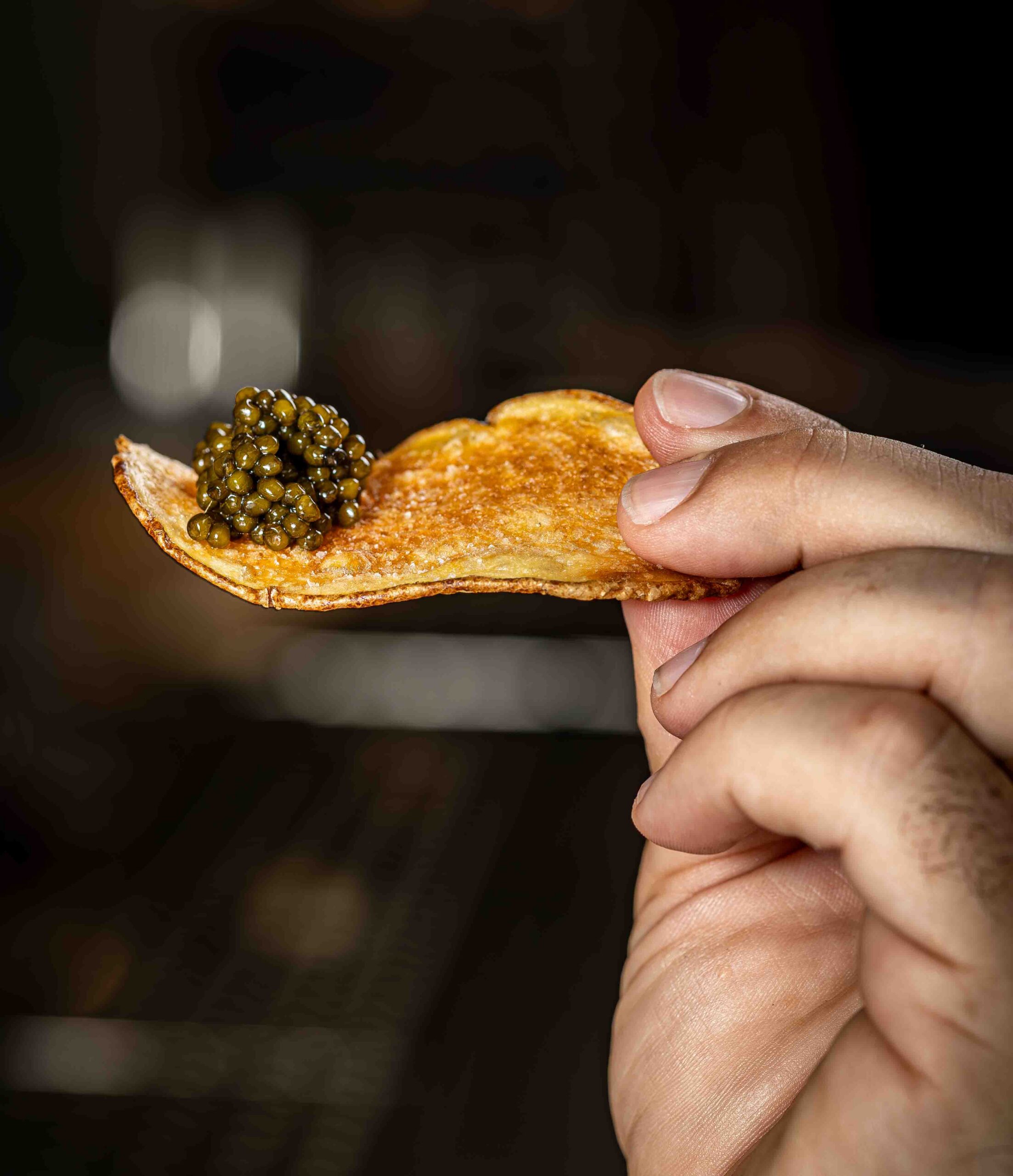
“Caviar started to become increasingly popular in mainstream America a few years back. I think the caviar ‘bump’ is to blame. It started with chefs doing collaboration dinners that had caviar sponsors, and there would be a ton of leftover caviar, so we would eat it off our hands in large dollops at the end of service. This took off with restaurants doing it for the guests,” he says. “Even though it’s been played out currently, I appreciate it because it’s another way for us to be able to educate the consumer.”
Beyond trends and creative pairings, caviar is increasingly within reach for everyday diners.
“Similar to wine, you don’t necessarily have to spend a lot of money to enjoy good caviar,” Alvarez says.
It’s a point echoed by Bella Mangiafico, general manager of Flûte & Dram.
“The misconception I often see is that caviar is only for millionaires. People hear ‘caviar’ and think it’s thousands of dollars. Caviar can be for everyone,” she says. “It ranges in price, and with the right guidance, anyone can access it.
“With apps like Instagram and TikTok, people are sharing their caviar experiences. It’s getting rid of the stigma that caviar is too expensive and showing that it’s more accessible than people think.”
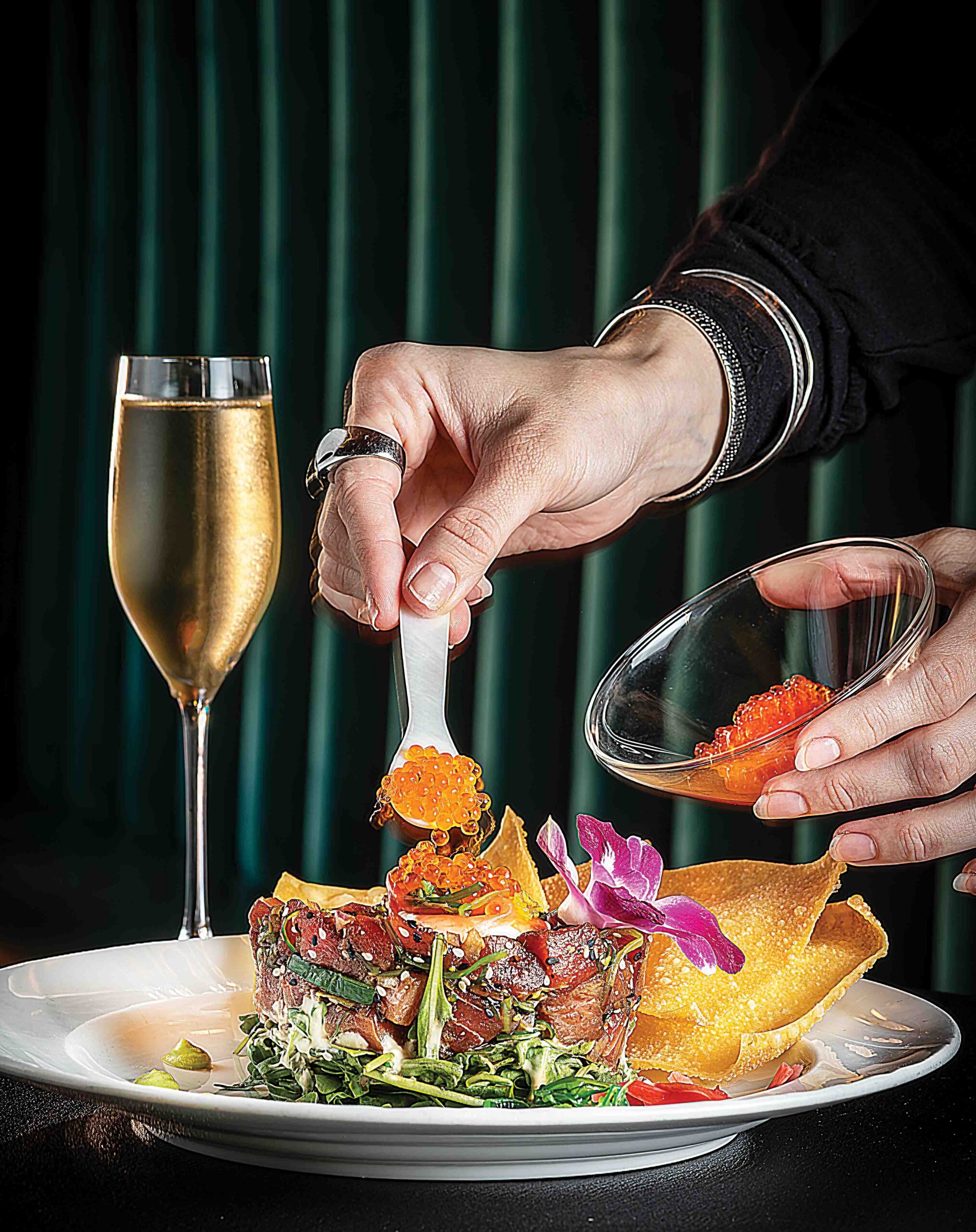
Flûte & Dram leans into that accessibility — it is a caviar and Champagne bar, after all. In addition to classic pairings, the team experiments with unconventional options, including topping chicken nuggets, stuffing olives for a dirty martini, and serving caviar on oysters, Cool Ranch Doritos and watermelon.

For those new to caviar, Mangiafico recommends starting with hackleback, a domestic variety of small black pearls and a briny flavor.
For purists who prefer to taste caviar on its own, how it’s served matters.
“Caviar should always be served with a mother-of-pearl spoon,” she says. “Caviar interacts poorly with metal, and the flavor will change upon contact. A mother-of-pearl spoon is nonreactive and preserves the delicate flavors.”
From TikTok “bumps” to carefully composed dishes, caviar has evolved beyond its luxury label. As more diners embrace it in both traditional and unexpected ways, the delicacy is proving it’s not just a status symbol — it’s an experience anyone can savor.
Meet the Chefs behind some of Tampa Bay’s restaurants. Or if you’re looking to advertise, click here.

